Value Studies

Class 2: Drawing

To Bring

  • The sketch that you made last session.

OR if you rather want to paint another subject:

  • Photographs or Print outs of Photographs of a subject that you want to draw.
    • It is best to bring multiple photographs of the same subject from multiple angles and details if you have them.
    • It is best to have the photographs on paper (larger print outs are easier to use).
    • Photographs on an iPad work too but you must be careful not to damage your iPad.
  • Pencils
  • Regular drawing paper for pencil sketches
  • Mixedmedia Paper A3 (If you don’t have this you can have a sheet of mine).
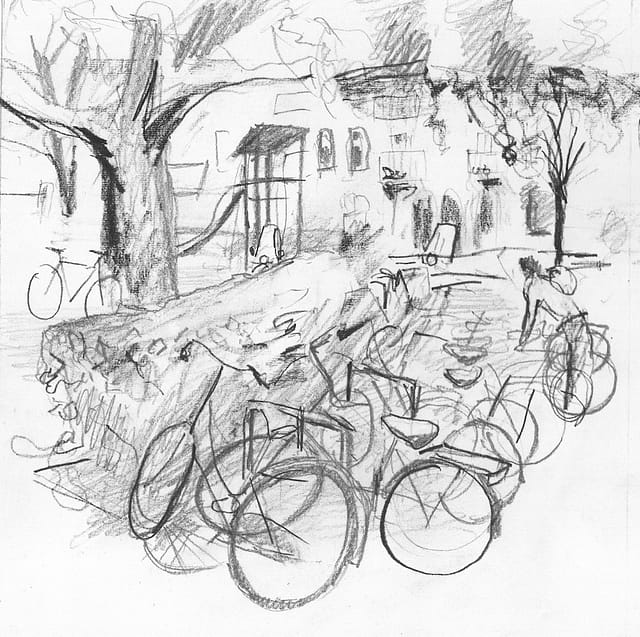
1. Sketch

2. Value Study

3. Painting

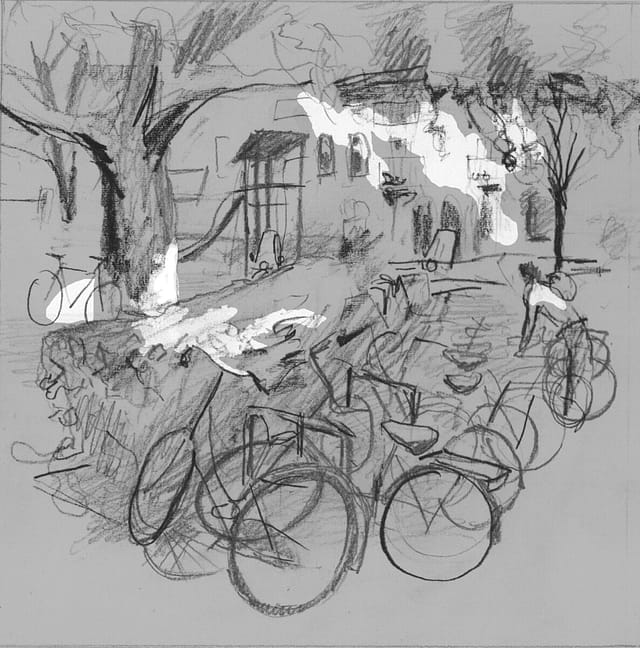
A drawing that captures the main forms and composition of the scene usually in lines. In my case usually made outside.

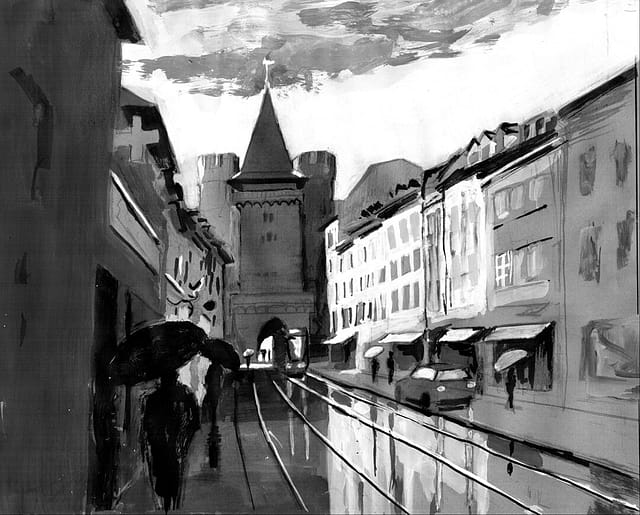
A drawing in grey tones that captures the distribution of values throughout the composition: where are the darkest darks, where are the lightest lights, where are the mid-tones. The values are simplified in about five grey tones:

  • white
  • light gray
  • mid grey
  • dark grey
  • black

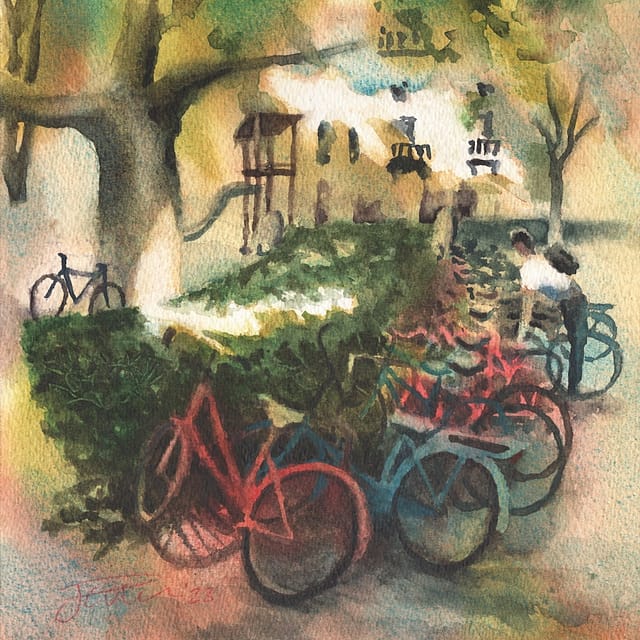
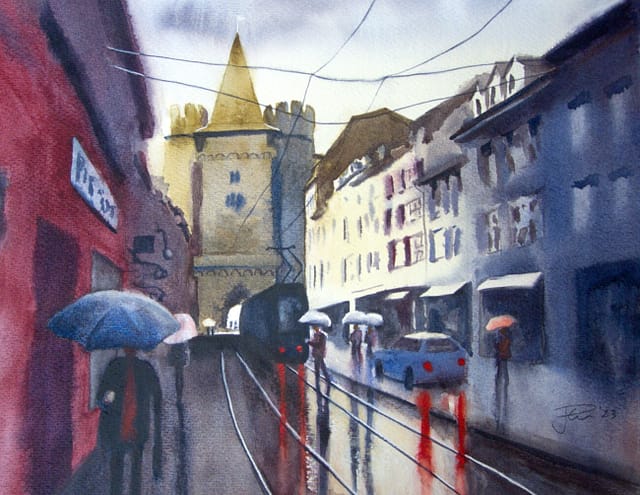
As you see the painting resembles the value study in the pattern of values (grey tones and white). 

2. Value Studies

Solve the Distribution of Light in Your Value Studies

Important for making value studies is that you choose a material that allows you to:

  • Fill a paper with large areas of different grey tones
  • Add some details
  • Be flexible in working light over dark and vice versa (and easily fix mistakes).

Simple Improvement of Natural Light

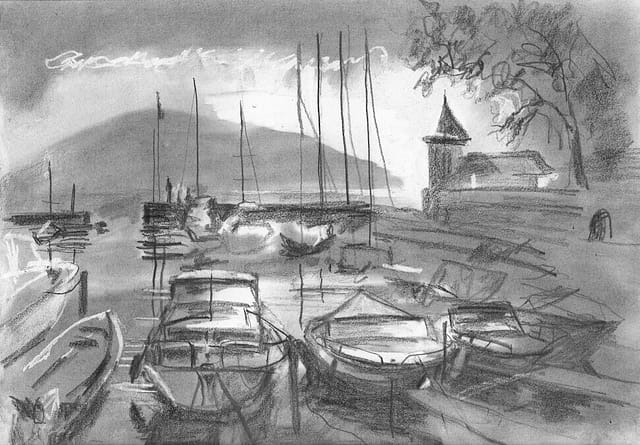
This drawing was made outside using jumbo graphite for the lines and graphite powder for the large areas of mid-tone grey. Whites were either preserved or added afterwards with an eraser (for instance the line of clouds). The effect of this drawing is rather similar to the previous process (Manual + Digital). It is currently my favorite way of working because it requires no scanning and digital editing.  

One Main (and Two Secondary) Spotlight(s)

This drawing was made outside using black pens (fine liners). In the studio I added grey tones with alcohol brush markers. While the resulting drawing is passable, I found the process too difficult. It is impossible to work from dark to light with acrylic markers. Every time I wanted to lighten an area I therefore had to overwork it with acrylic marker. You can see also see the difficulty I had to keep certain areas white. In many places I had to use a kind of white-out to bring back white areas.    

Three "Stepping Stone" Spotlights

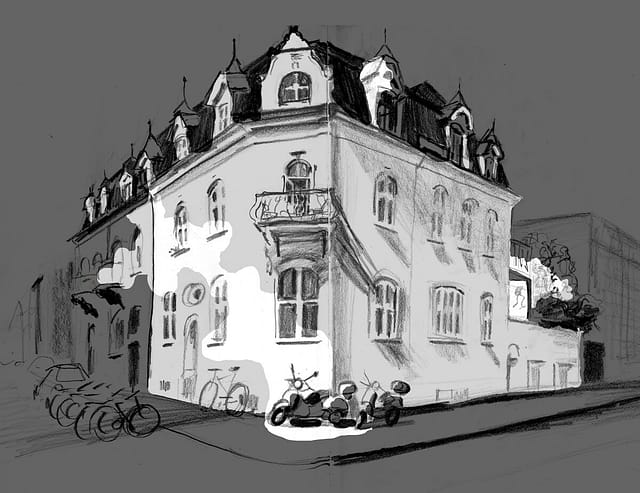
The original of this drawing was made outside in Jumbo Graphite (without any large grey areas, as depicted above under “sketch”). To create the value study, I scanned the drawing and added a single transparent layer of a mid grey tone digitally (in a program comparable with Photoshop). Multiple grey tones are created because the layer transparently overlaps the lines. The most important however, is the distribution of the whites which indicate the main lights.  

Spotlights Inducing Movement

The original of this drawing was made outside in Jumbo Graphite (without any large grey areas, as depicted above under “sketch”). To create the value study, I scanned the drawing and added a single transparent layer of a mid grey tone digitally (in a program comparable with Photoshop). Multiple grey tones are created because the layer transparently overlaps the lines. The most important however, is the distribution of the whites which indicate the main lights.  

Light as Subject

The technique that I use for my value studies also depends on the subject. Since this seascape involves few details and few lines, I could easily paint/draw it with acrylic paint. (Imagine how difficult it would be to paint all the bicycles or boats from the previous images). Gouache is also perfectly usable. Transparent watercolor or (brush and) ink are much less useful since you have to build up the value study from light to dark and it is very difficult to make things lighter once you have painted an area in a certain value.  

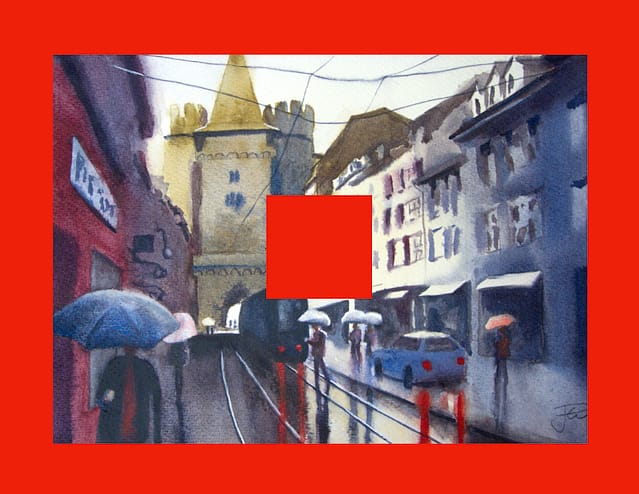
No Lightest Lights and Darkest Darks in the Red Zone

The red zone is also important in arranging where you place your lightest lights and darkest darks. Avoid placing those in extreme lights and shadows in the red zone. Look at the painting at the bottom. The sky is relatively light because the painting depicts the light piercing through the clouds during rain. However, I made sure to darken the sky where it reached the top border of the image (the red zone). As you see, it is OK to let strong light pass through the red square in the center if it is part of a larger area, but avoid pure white in the center and do not place small light specks in the exact center of the image, or around the border.