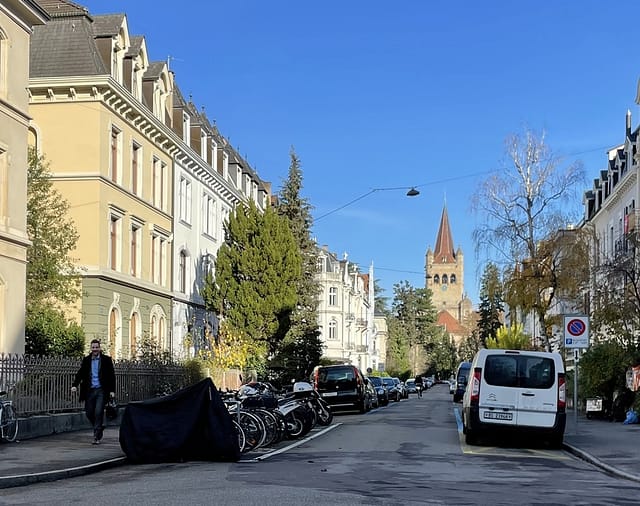
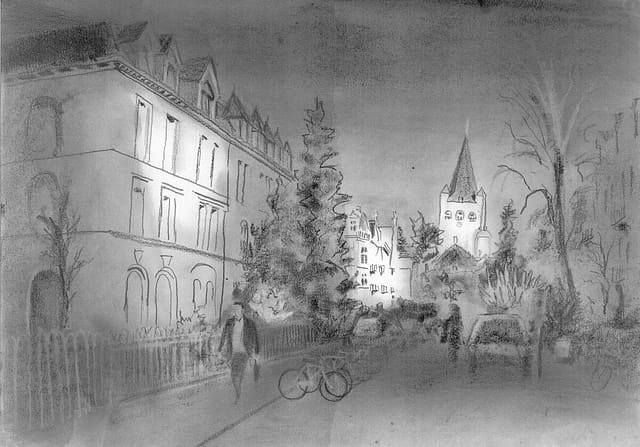
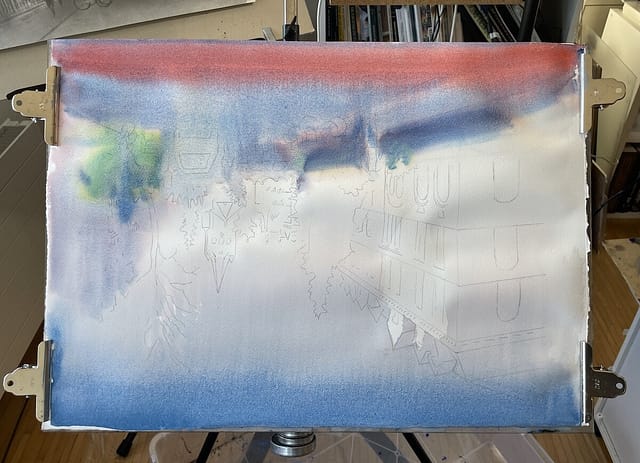
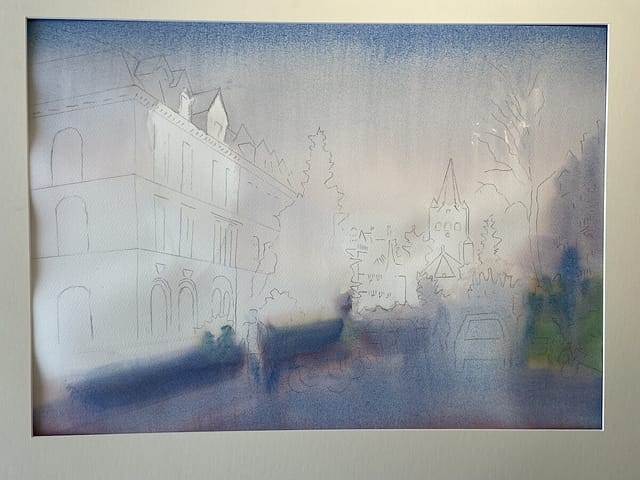
- Watercolor painting materials as usual (don’t forget your plexiglass plate).
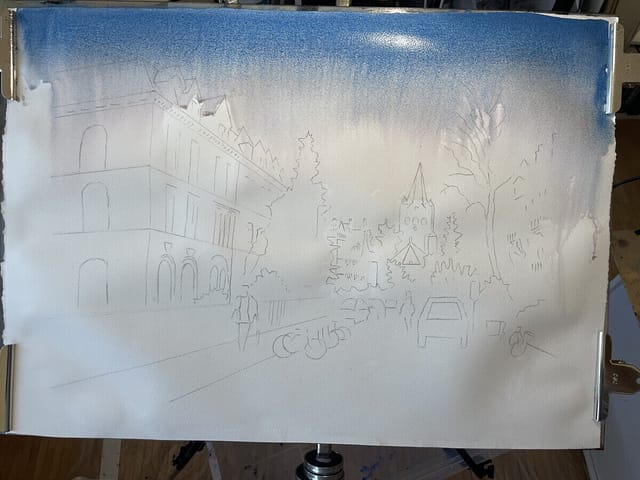
- The Watercolor paper with your design on it (I will bring the small light box for if you didn’t transfer the design yet, in that case bring your design!).
- If you have an easel this would be the time to bring it
- If you want to buy an easel this would be the time do so (Lachenmeier Farben on Auf der Lyss and Clara Strasse has good ones for 39 CHF)
- Your Finished Value Study
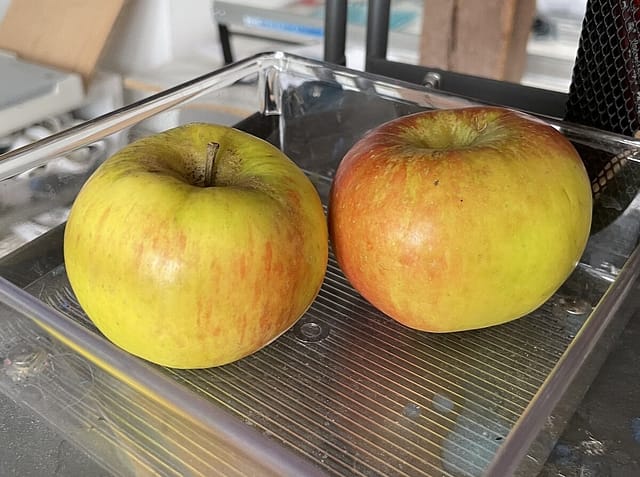
- Your Reference Photo – print outs. Preferably in Color
To Bring
Activating and Mixing Paint
Activating Paint: Mixing paint from the tube with enough water to make it ready to paint with.
Always activate your paints before you start mixing or painting, because:
- You can better judge the color and value of your mixtures
- Paint from the tube is too thick to paint with.
Activating Paint
Mixing Paint
1. Squeeze paint in small container
2. Add a bit of water. It is easier to add a bit less water than needed at first and add more later.
3. Mix water and paint. Thickness should be about the consistency of drink yoghurt.
The paints are now ready to mix or to paint with. To mix, transfer you paint to your palete.


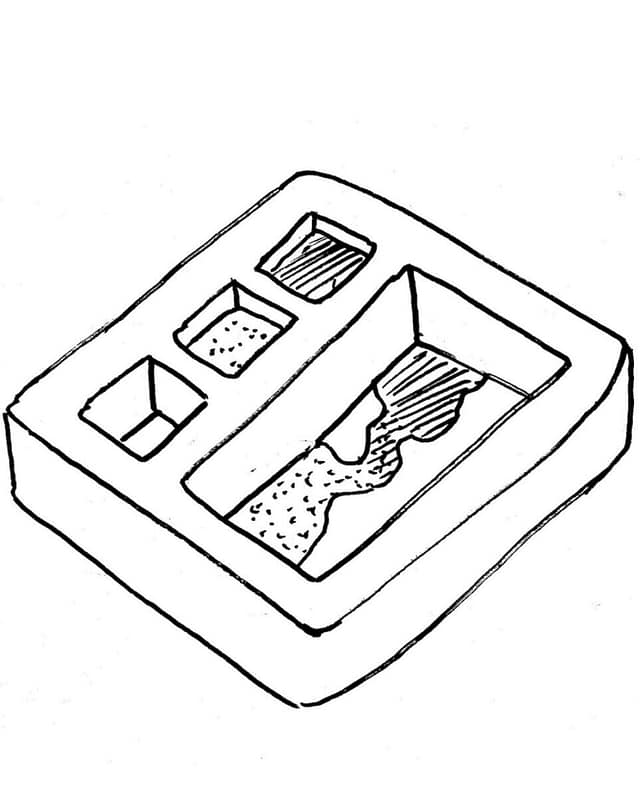
Activating and Mixing Paint in Palettes with Wells
Activate paint in small wells

Mix in the large area
The Watercolor Process
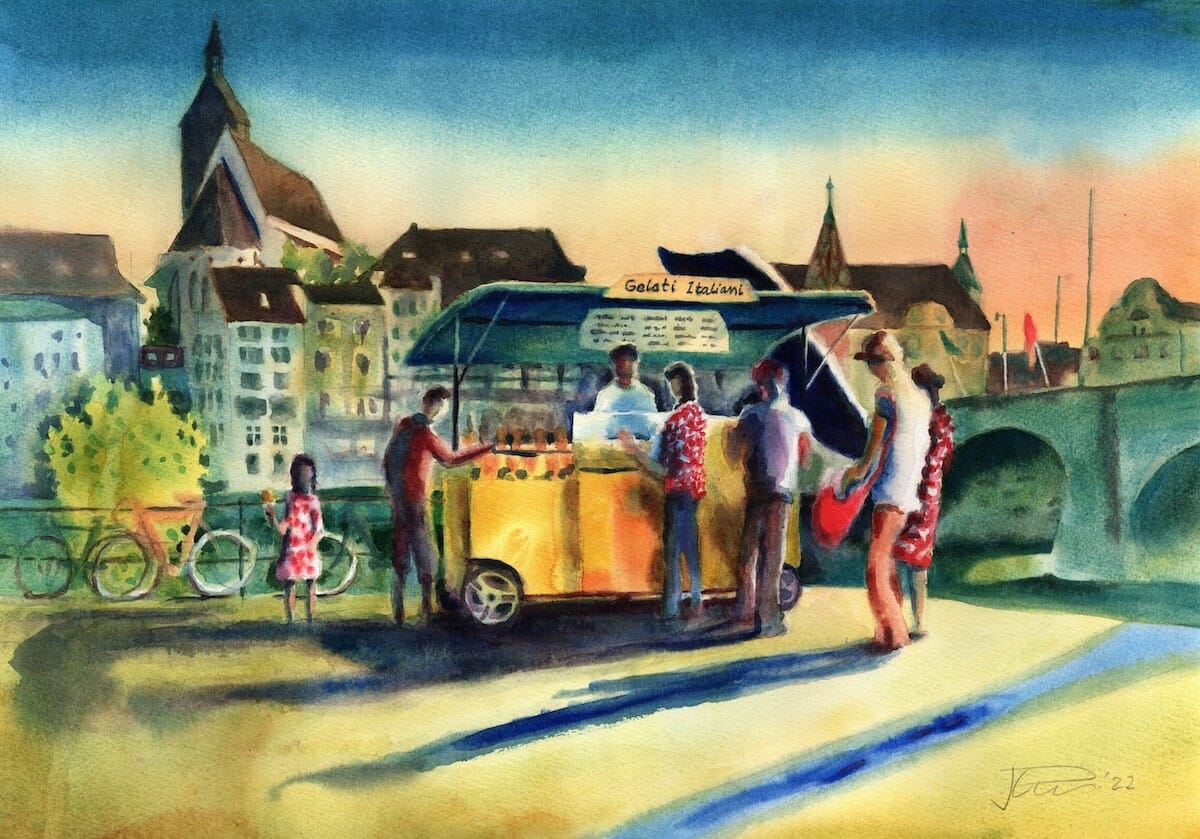
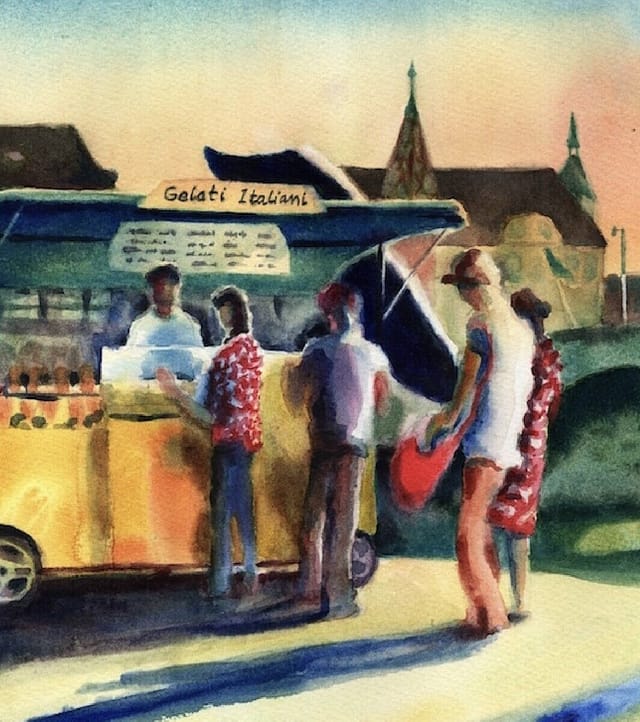
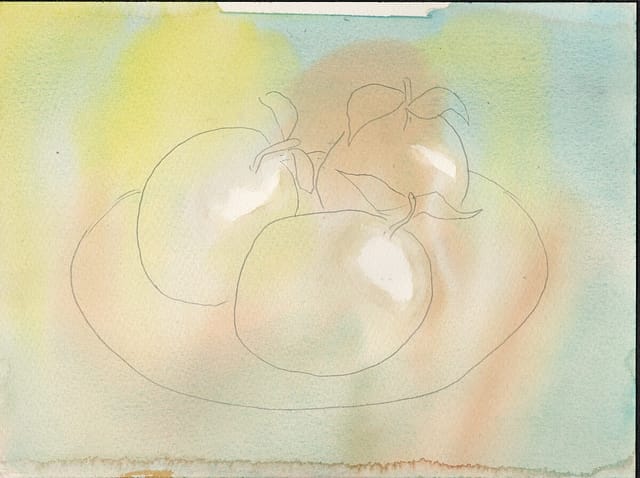
We are going to look at the process of watercolor painting in three steps. As example I have used the painting below.
1. First
2. Then
3. Finally
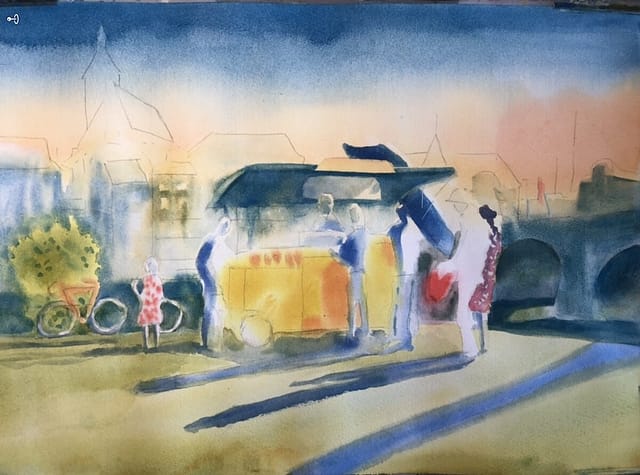
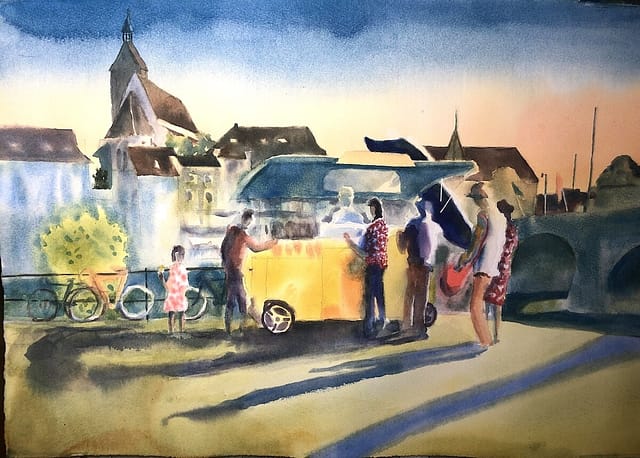

Whites
Save the Whites by painting around them with the first light colors (save the whites with the lights)
Save your whites, some adjustments
Adjust your whites to your liking
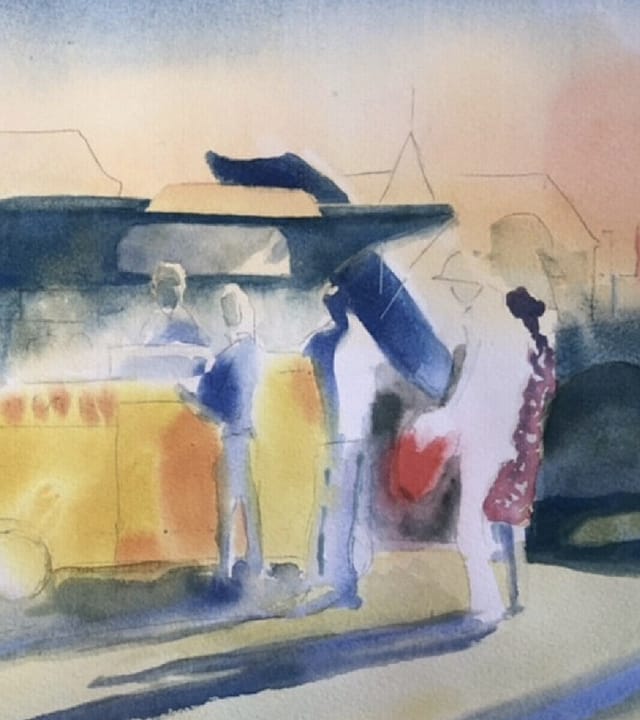
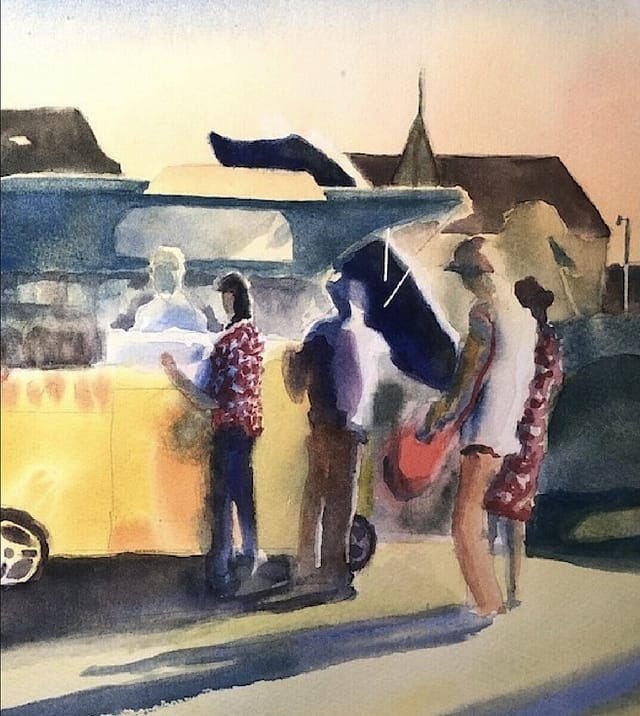
Values
Light Colors (light colored Paints with quite a bit of water)
Midtones (same light colors with less water)
Dark Colors (Dark Paints)
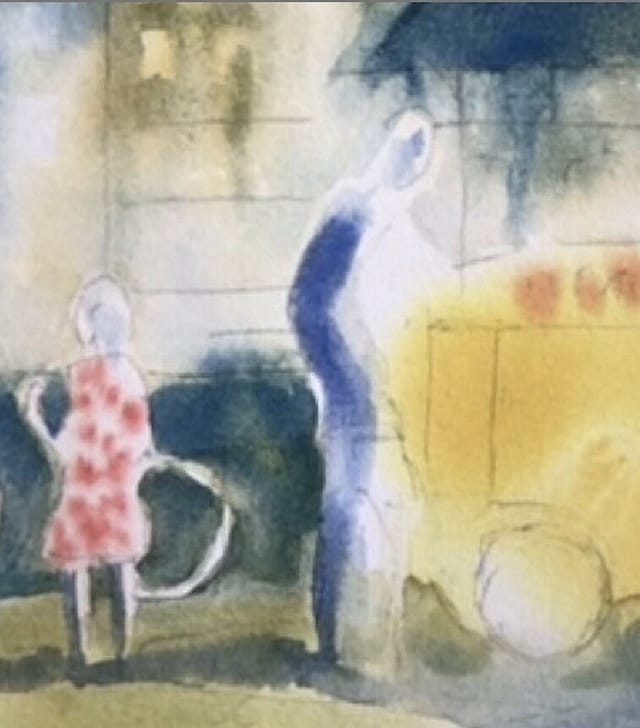
Colors
Either adhere to your color plan or be relatively free in your color choices
If you want to keep colors fresh, work warm over warm (red, yellow, orange) and cold over cold (blue, green, bluish purple)
Again, if you want to keep colors fresh, work warm over warm and cold over cold, the darkest darks however are mixtures of warm and cold (dark greys and black).
Shapes
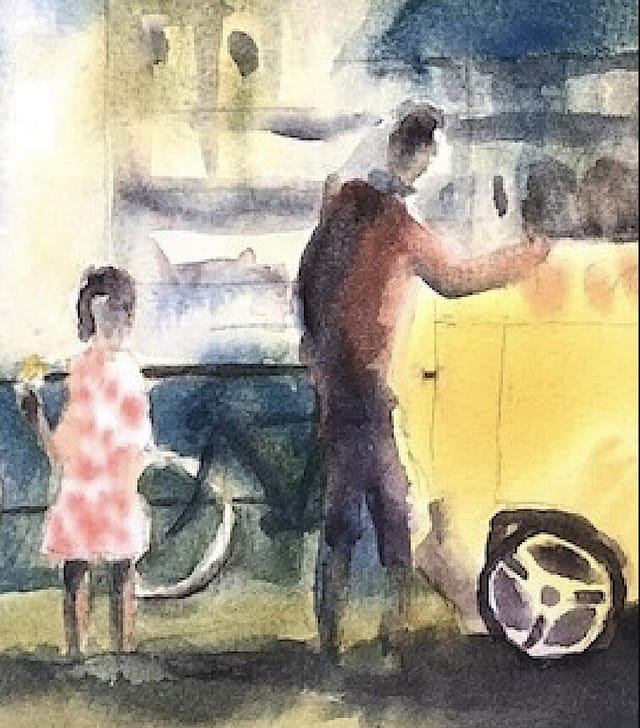
Large Shapes
Mid-Size Shapes
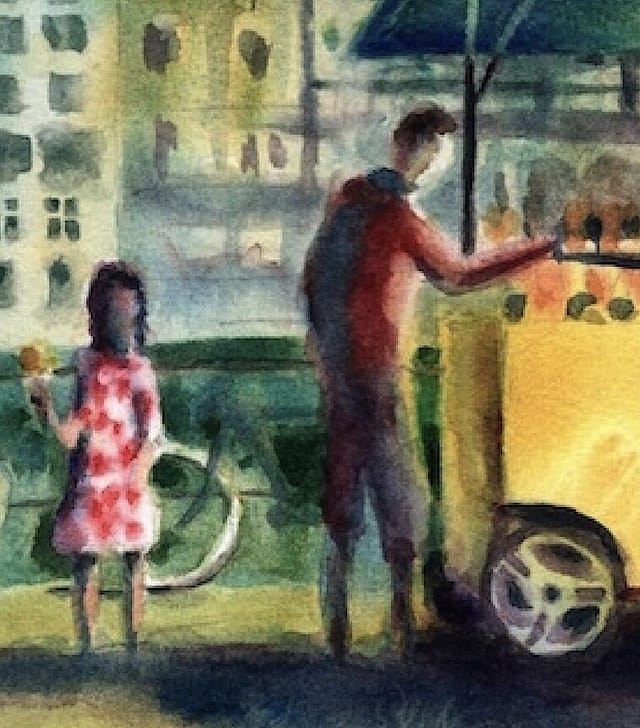
Details
Painting precision
Paint through the lines (of your drawing!
Often you still paint through the lines but be more precise
All or most lines will be invisible by now.
Painting technique
Wet in Wet
Wet in Wet – after letting the previous wash completely dry. Pre-wet a local area.
Dry Brush
Edges
Soft Edges
Soft and Hard Edges
Hard Edges
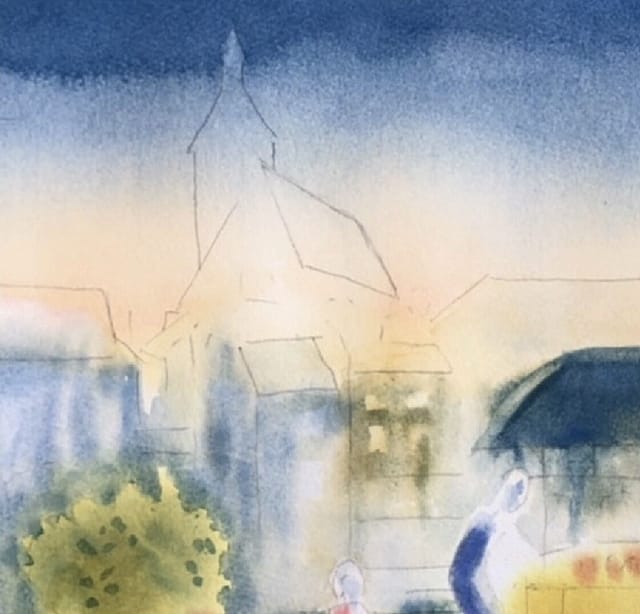
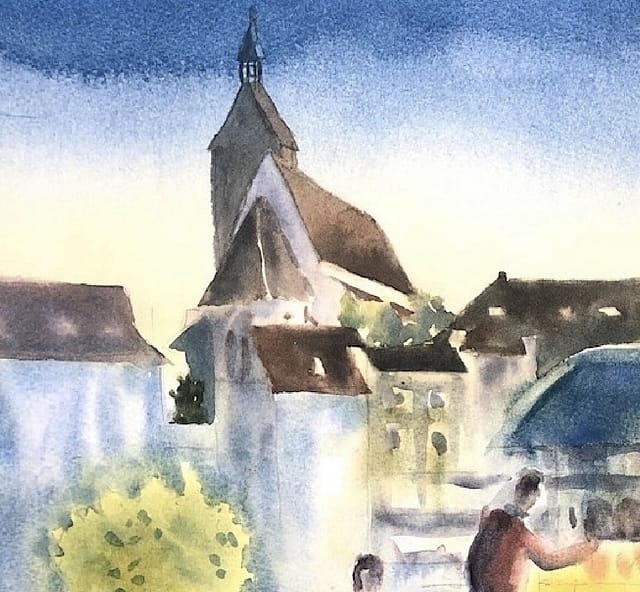
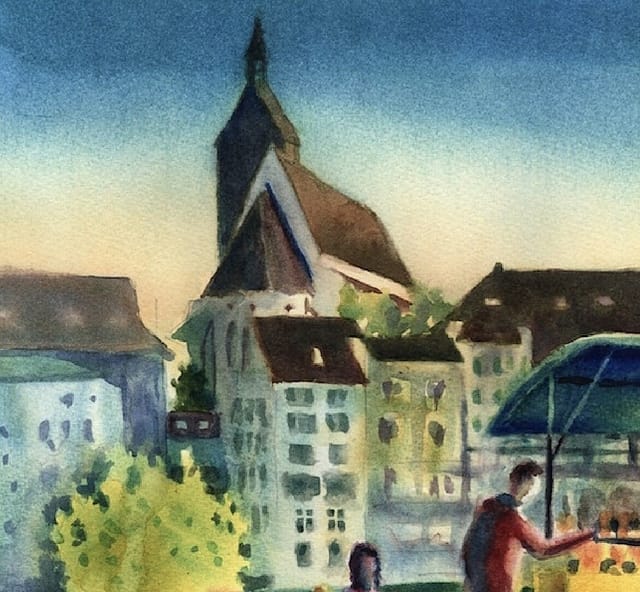
Same Process using "abstract" granulation in the first (light) wash.
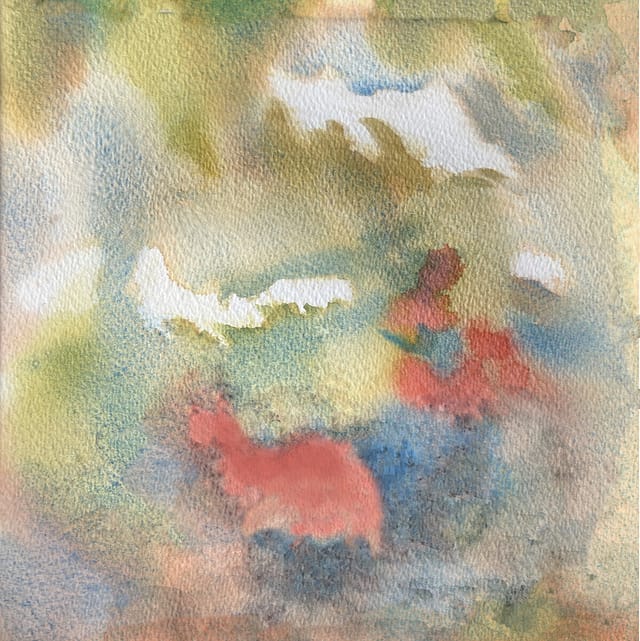
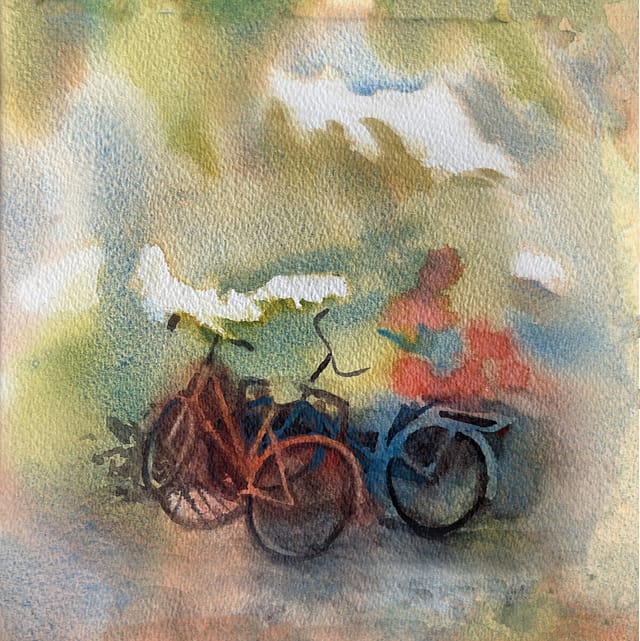
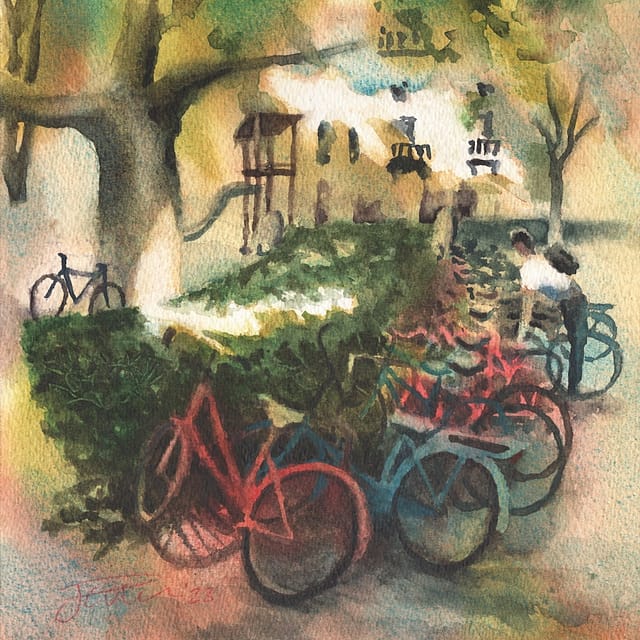
“Abstract” granulation lends itself especially well to color experiments. Imagine that you had uses different colors in the first wash, or the same colors but dropped them in in a different pattern. Below on the right I imagined this and changed the colors digitally. I would of course use other colors or the same colors arranged differently to finish the painting. But if I follow the value study carefully, the atmosphere will then change but the primary form and visual content will not. Be free in your color choices first wash, become increasingly discerning and particular in subsequent washes. Remember, if you paint light to dark and reserve your whites, very little can go wrong.

Demonstration Painting
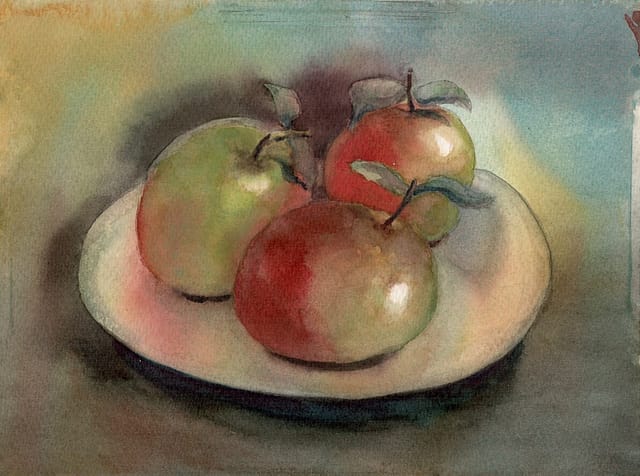
Capture the Whites
Light Colors with a lot of Water
Light Colors with less Water
Dark Colors
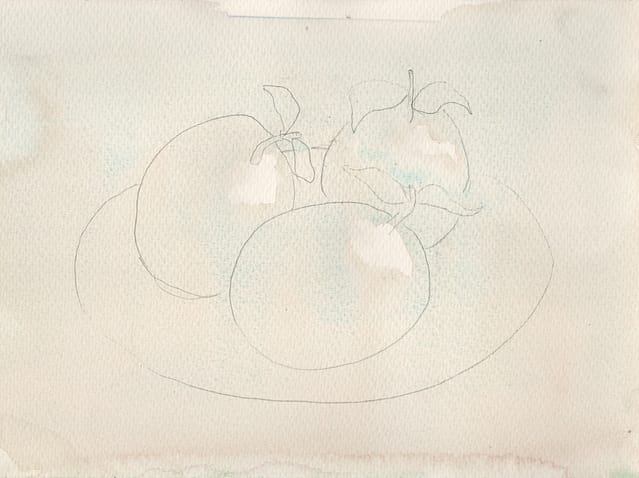
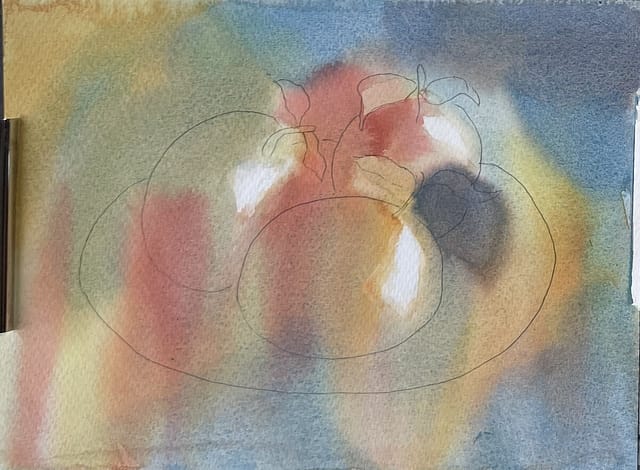
Painting the Dark Colors
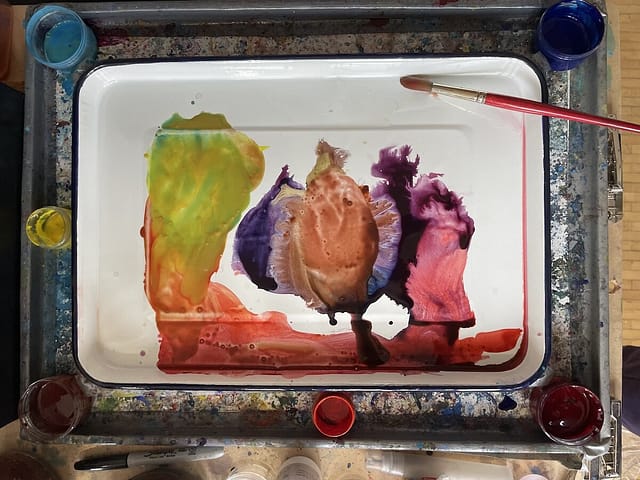
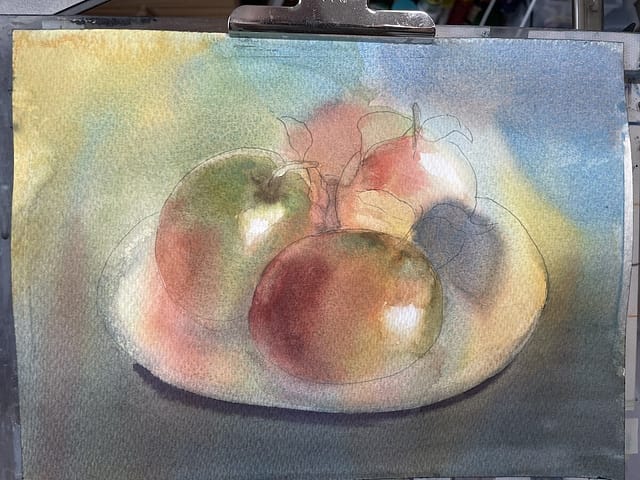
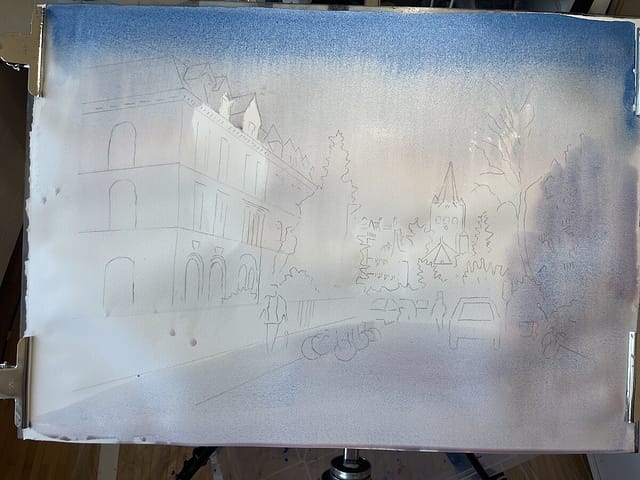
The First Wash