Color and Value

Color and Value

1. Color

There Are No "PURE" Primary Primary Colors in The Real World of Paint

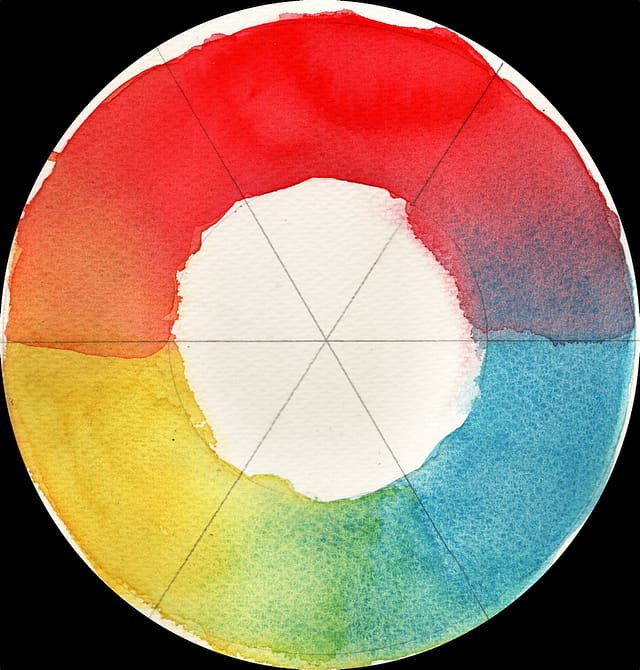
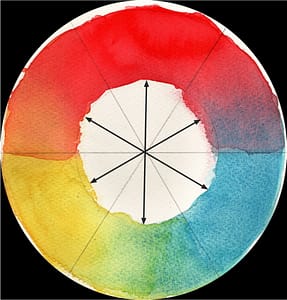
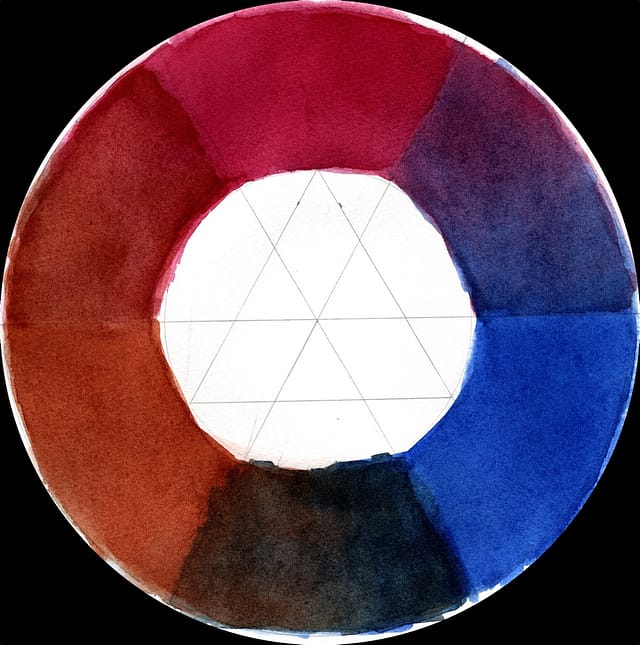
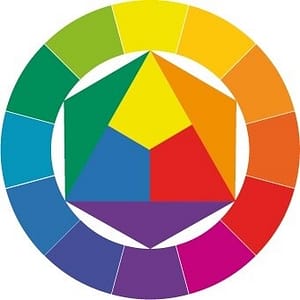
Traditional Color Circle

This is NOT how color mixing for painting works.

We all learn about the color circle in school. There are three primary colors: Red, Yellow and Blue and when we mix these we make secondary colors.

  • Red + Yellow = Orange
  • Red + Blue = Purple
  • Blue + Yellow = Green

Generally this is fine. But for painters the problem is that the system implies that there are pure primary colors out there in the world with which we can mix pure secondary colors. This is not the case.

In reality every primary color "leans" towards a neighbouring secondary color.

Think of a greenish blue or a puple-ish red. In reality most primary colors lean a certain way, even if it is hardly perceptible on first sight.

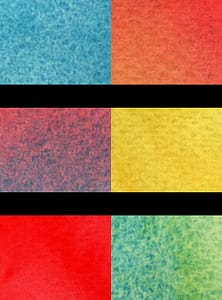
Below are the two pairs of light primary colors that I often use in my paintings. Of these six I pick only 3. (I pick another set of 3 dark primary colors, discussed below).

Green Leaning

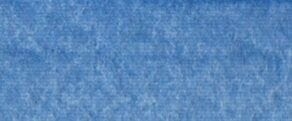
Blue

Cerulean Blue

Violet Leaning

Blue

King’s Royal Blue

Violet Leaning

Red

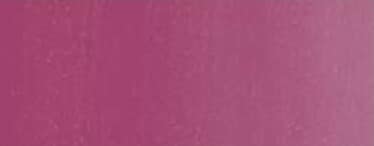
Permanent Rose

Orange Leaning

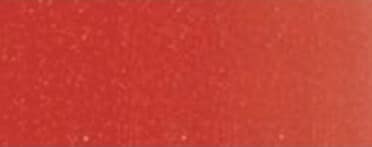
Red

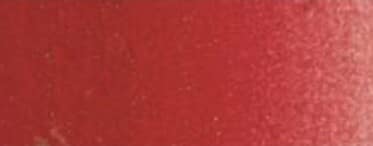
Scarlet Lake

Orange Leaning

Yellow

Aureolin

Green Leaning

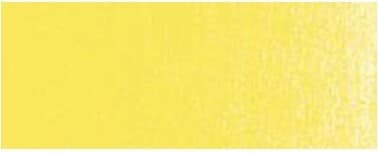
Yellow

Lemon Yellow

"Leaning" primary colors mix the purest secondary colors

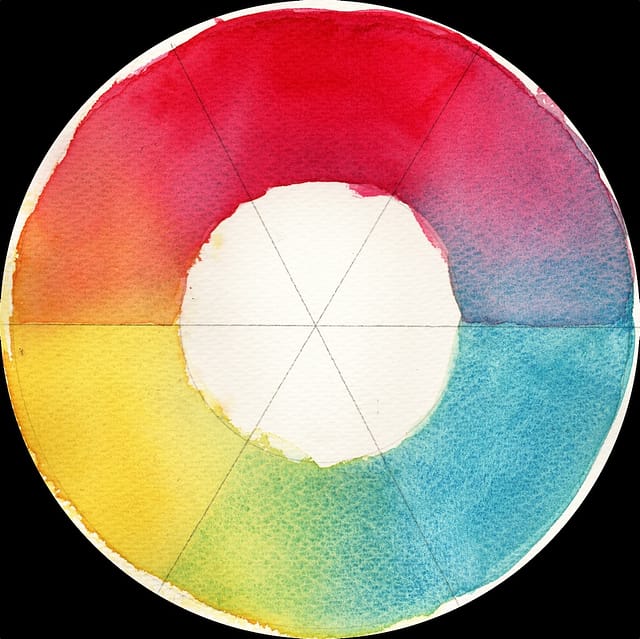
Moreover, even if a color is smack in the middle and doesn’t lean toward any secondary color, ‘leaning’ primary colors are better to mix purer secondary colors. Hence a greenish blue is better to mix a pure green with than a “pure” primary blue. Look at the examples below.

A

Yellow: Aureolin

Red: Scarlet Lake

Blue: Cerulean

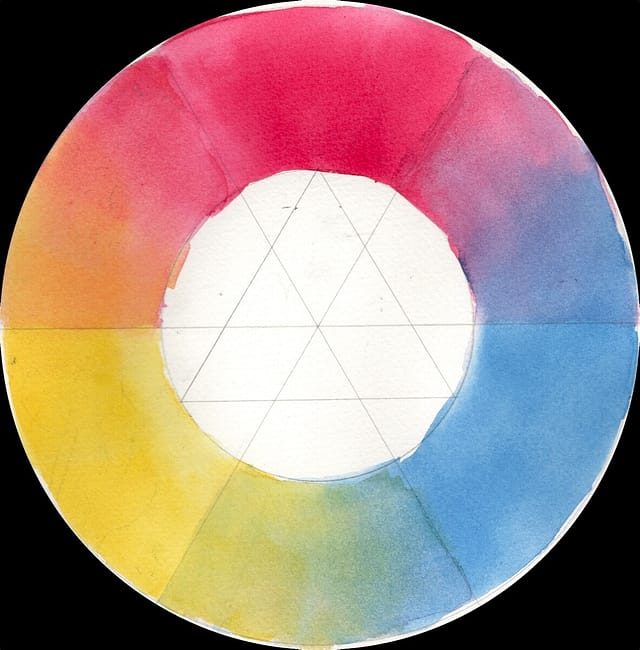
B

Yellow: Aureolin

Red: Permanent Rose

Blue: Cerulean

C

Yellow: Aureolin

Red: Permanent Rose

Blue: Cobalt Blue 

Look at the three color circles above. No three primary colors can mix all colors perfectly. In circle A, the orange and green look nice, fresh and pure, but the purple looks more greyish, the more blue is mixed in to it. Then look at color circle B, where we have switched the red for a ‘rose’ color. This is a red that contains more violet which makes is much better for mixing a pure purple. However, on the blue end of the purple, we still see a greyish tint emerging. We have fixed this in color circle C. Here we have switched the blue to cobalt, an almost primary (middle blue). The result is a beautiful “ideal” purple. However, if we now look at the green, we see that it is less fresh and more greyish than in the first two circles. If we go back to the second circle and look at the orange there is also a perceptible difference between the first circle and the second and third circles. In fact the rose produces a little less pure orange than the scarlet.  

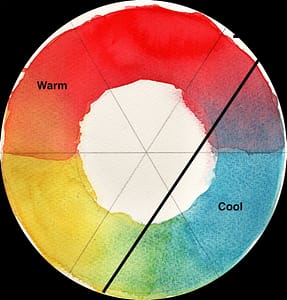
Warm and Cool Colors

Colors can be divided in two types: Warm and Cool. Red,Yellow and Orange are warm colors (orange being the warmest). Blue, Purple/Violet, and Green are cool colors (blue being the coolest.

Complementary Colors and Neutrals

Complementary Colors are colors that are on opposite sides in the color circle. Every primary color is paired in this way with the opposite secondary color:

Orange – Blue

Yellow – Purple

Red – Green

Complementary colors are the most different from each other. They form a strong contrast and attract a lot of attention when placed next to each other.

King’s Royal Blue, Scarlet Lake, and Aureolin.

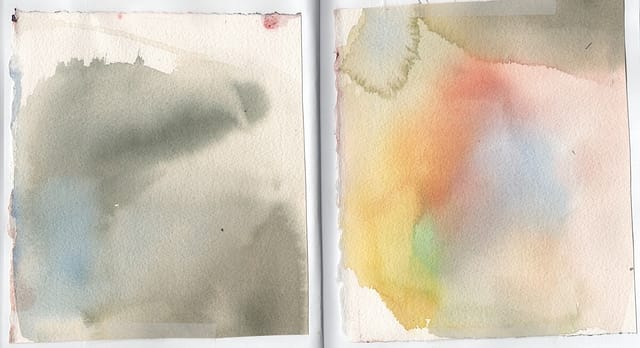
When mixed complementary colors make different “neutrals,” that is greys or browns. Neutrals can also be mixed by combining simply the three primaries. If I intend to have greys and browns in my paintings I always test how the type of neutrals that results from mixing of my three primaries. The Neutrals depicted to the left are mixes of King’s Royal Blue, Scarlet Lake, and Aureolin.

2. Value

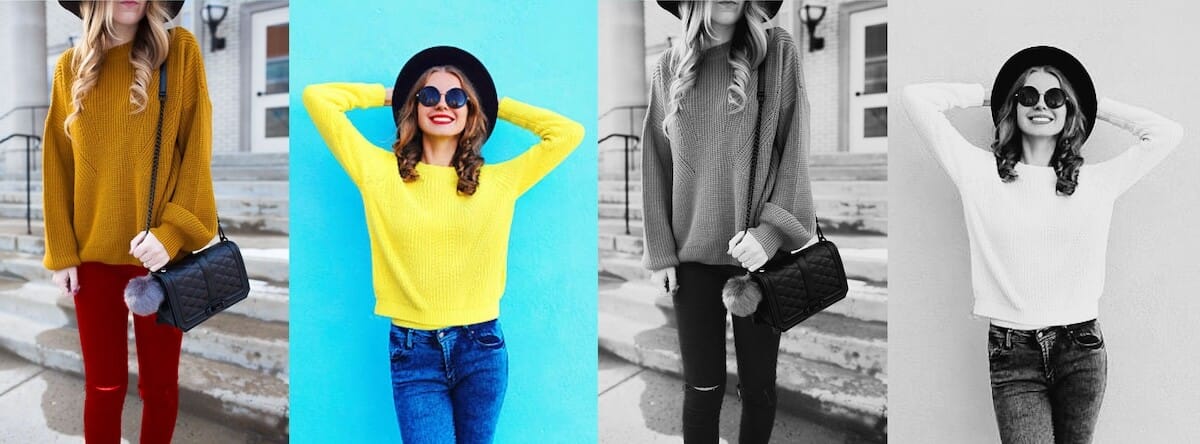
The value of a color just means how dark or light that color is. Imagine your painting copied on a black and white copy machine. Certain colors translate to light greys others to almost black. Red or blue can be light or dark. A yellow tint, however, can be ligher or darker but can never be truly dark.  

Dark Colors

Green Leaning

Blue

Phtalo Blue

Violet Leaning

Blue

Ultramarine Blue

Violet Leaning

Red

Permanent Magenta

Permanent Alizarin Crimson

Orange Leaning

Red

Carmine

Orange Leaning

Yellow

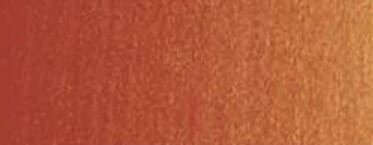
Burnt Sienna

Green Leaning

Yellow

These do not exist

Yellow: Burnt Sienna

Red: Permanent Alizarin Crimson

Blue: Phtalo Blue (Winsor Blue) 

The IMPORTANCE of Value

In painting value is generally more important than color. We can usually paint the same subject with different colors and still get a convincing picture. Completely changing the value scheme will much more drastically change the image and usually results in failure.

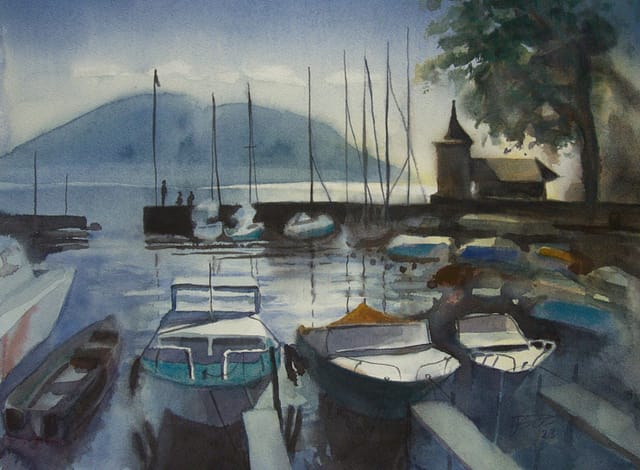
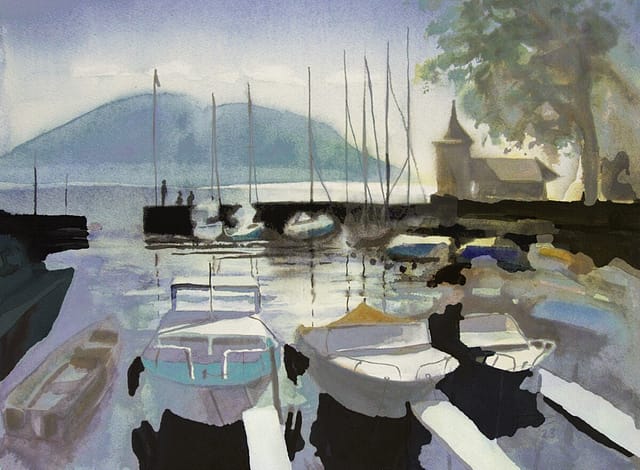
Look at the three images below. Image A the left is the original that we have discussed before. Image B in the middle is a photoshopped version of the same painting. I have changed only the colors but kept the values the same. This is a perfectly readable landscape. The lights and darks are in the same places as in the original, which means that the sense of depth and the places of attention are identical. The atmosphere however has completely changed. The image is much warmer since there is more warmer pinkish red light and less cool blues and greens, I would not think that this is a marina in Switzerland but somewhere in the tropics, like Florida, although on certain special light conditions it could still be lake Geneva. Now look at image C. Here I have kept the color scheme of the original but only changed the distribution of values. Whites, darks and midtones are in different places than the original. The light is now placed wrong, which means that the space is very difficult to read and attention goes to the wrong places, at the edges of the image. We can conclude from this that:

VALUES determine the COHERENCE of your painting

COLORS determine the ATMOSPHERE

A

B

C

How to paint different values

There are two ways to make value changes in watercolor

1. Using Dark and Light Primaries

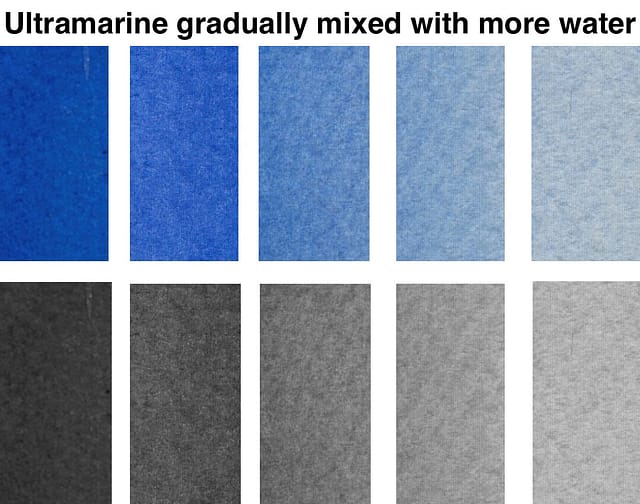
2. Adding More or Less Water to Your Paint

The best way is to combine both methods

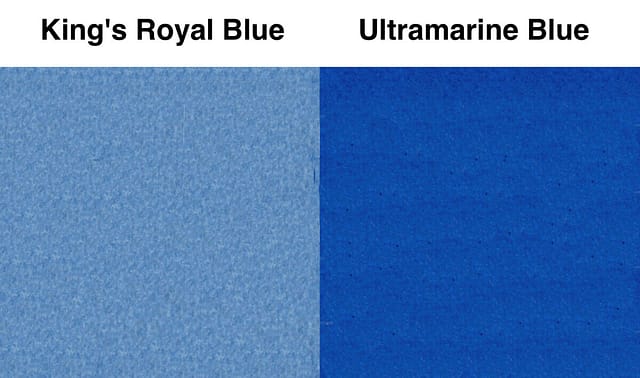
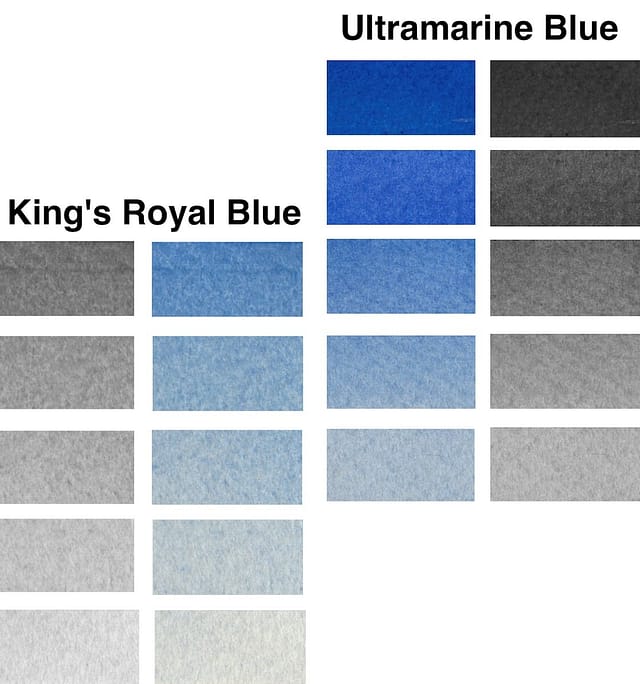
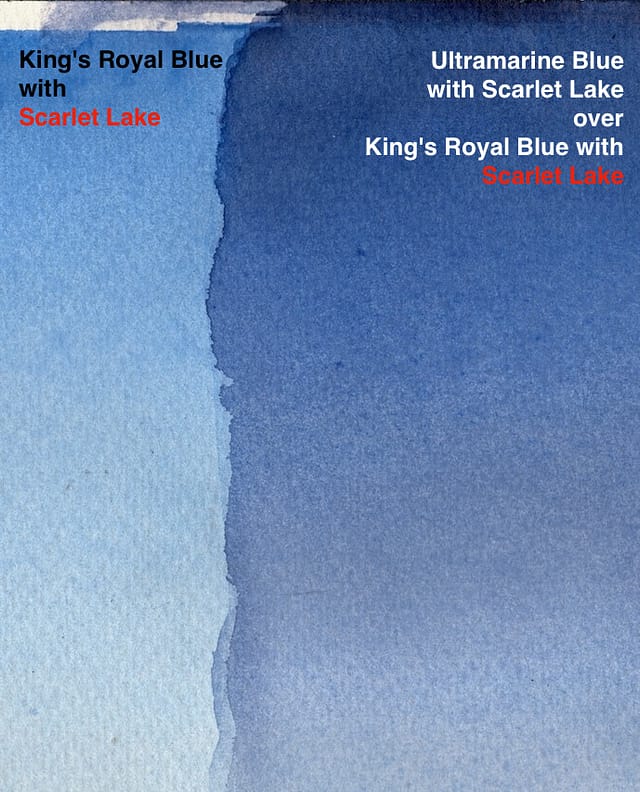
This comparison of the possible values of ultramarine and king’s royal blue shows the “band-with” of the two colors. Colors look best when they have a reasonable amount of pigment with not too much water. A color that is much watered down will look dull and “colorless” through the lack of pigment. Since Ultramarine is a dark color it thus works best as a dark or a darker midtone. Light midtones and lights created with ultramarine and water look much duller than those created with King’s royal blue. King’s royal blue on the other is just too light to provide midtones let alone darks.

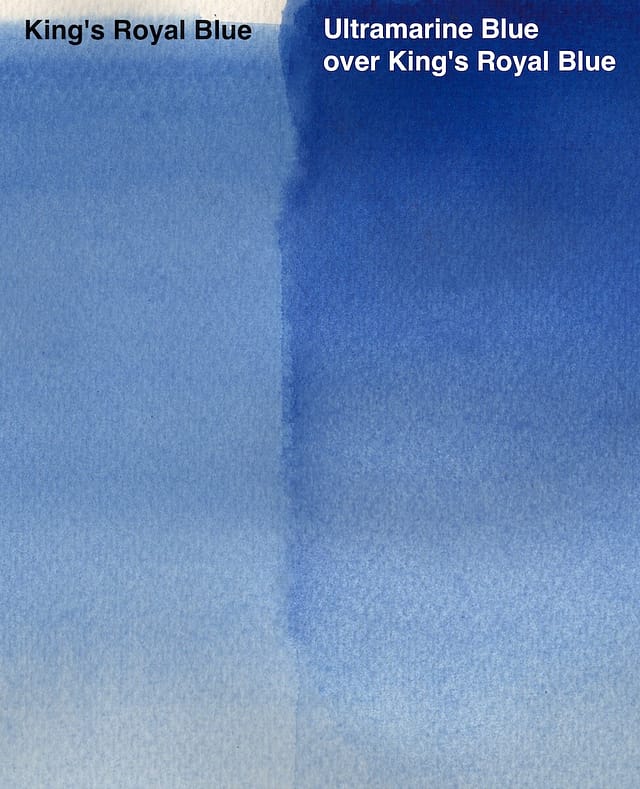
The solution to the “band-with” problem is to layer dark colors over light colors. In this example I applied two layers (called washes). The first wash is king’s royal blue which was applied in a gradient over the entire paper. After letting the paper completely dry I applied a similar wash of ultramarine over the first wash. Compare this to the single wash of only ultramarine below. The “two-color” wash above has much more “band-with” and is more interesting and vibrant in the mid and light tones. 

In my actual paintings I rarely use pure colors. In this example I did the same thing as in the previous example but I mixed both blues with a little bit of scarlet lake (a light red). I think the mixture looks more interesting than the pure blue.

The Watercolor Process

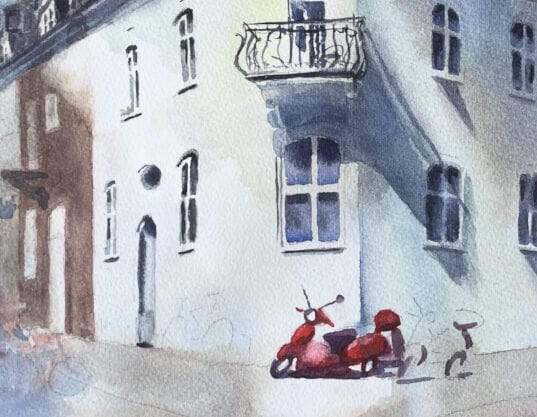
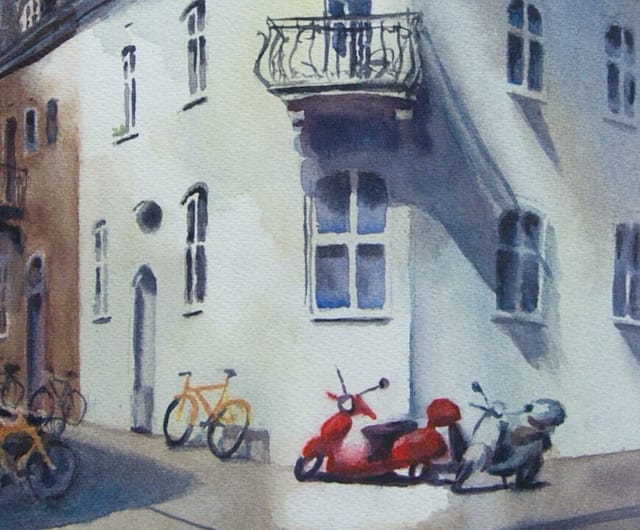
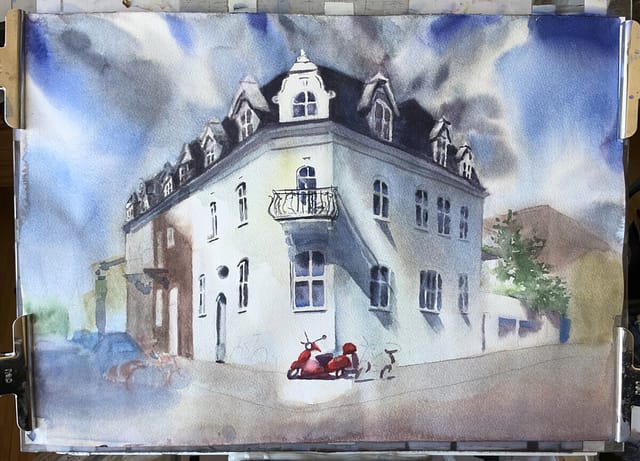
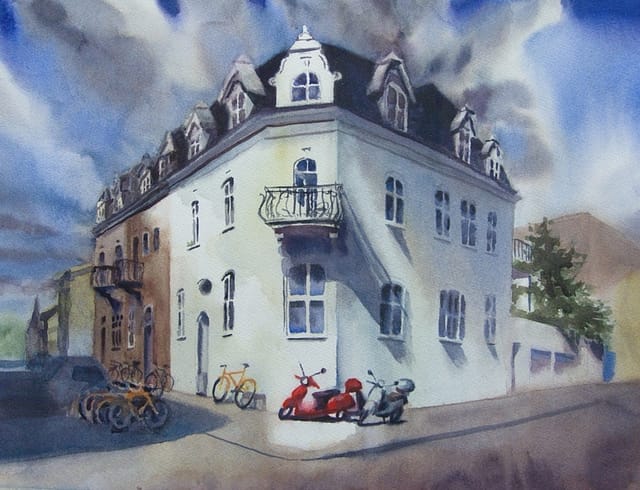
From start to finish

First

Then

Finally

Whites

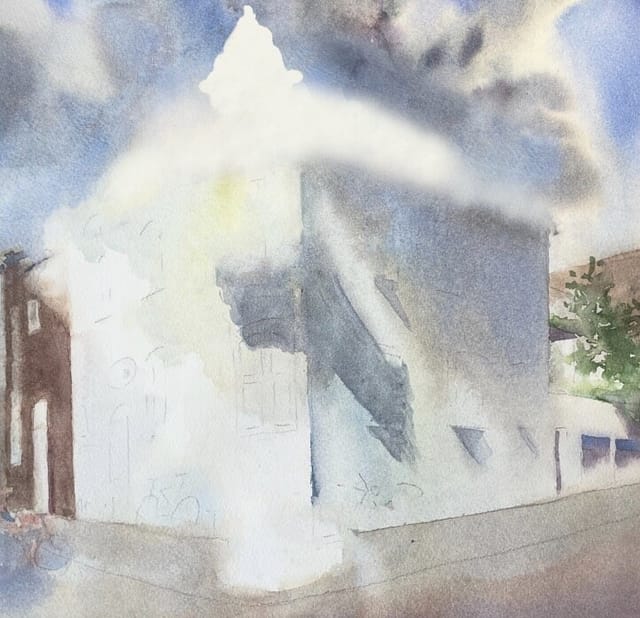
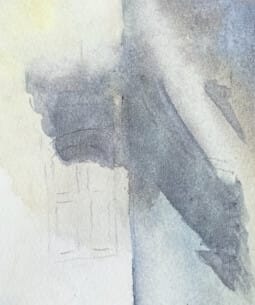
Save the Whites by painting around them with the first light colors (save the whites with the lights)

Save your whites, some adjustments

Adjust your whites to your liking

Values

Light Colors (light colored Paints with quite a bit of water)

Midtones (same light colors with less water)

Dark Colors (Dark Paints)

Colors

Either adhere to your color plan or be relatively free in your color choices

If you want to keep colors fresh, work warm over warm (red, yellow, orange) and cold over cold (blue, green, bluish purple)

Again, if you want to keep colors fresh, work warm over warm and cold over cold, the darkest darks however are mixtures of warm and cold (dark greys and black).

Shapes

Large Shapes

Mid-Size Shapes

Details

Painting precision

Paint through the lines (of your drawing!

Often you still paint through the lines but be more precise

All or most lines will be invisible by now.

Painting technique

Wet in Wet

Wet in Wet – after letting the previous wash completely dry. Pre-wet a local area.

Dry Brush

Edges

Soft Edges

Soft and Hard Edges

Hard Edges

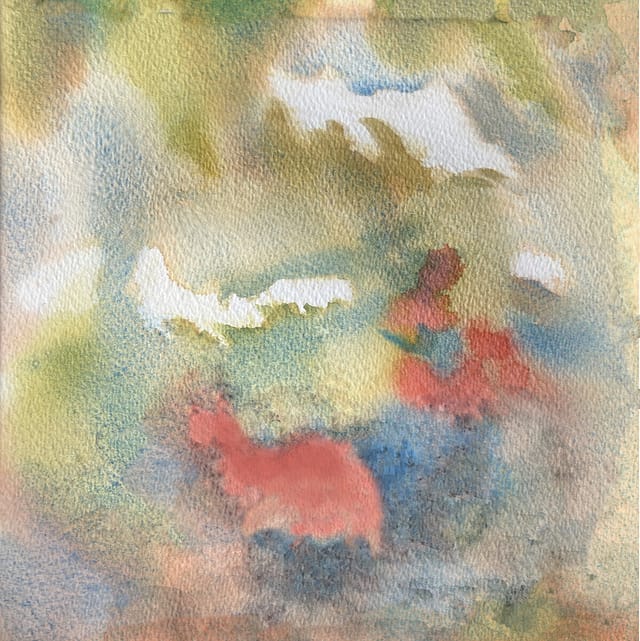
Same Process using "abstract" granulation in the first (light) wash.

“Abstract” granulation lends itself especially well to color experiments. Imagine that you had uses different colors in the first wash, or the same colors but dropped them in in a different pattern. Below on the right I imagined this and changed the colors digitally. I would of course use other colors or the same colors arranged differently to finish the painting. But if I follow the value study carefully, the atmosphere will then change but the primary form and visual content will not. Be free in your color choices first wash, become increasingly discerning and particular in subsequent washes. Remember, if you paint light to dark and reserve your whites, very little can go wrong.